“Are you really trying to learn a new skill? You’re over the hill!”
That was our 18-year-old son’s reaction when his father, who had just turned 50, signed up for an online data analysis course.
We had a good laugh about it. He certainly doesn’t consider himself to be over the hill. But from the point of view of an 18-year-old, 50 seems like infinity.
But what if your 50s are actually the perfect time to start learning something new?
In your 30s and 40s, you’re busy raising children, working, paying off a mortgage and dealing with a million other responsibilities. But after 50, your children become more independent. And honestly, we do love them a little more when they can heat up their own lunch, right?
At this stage of life, many people can finally say: Now it’s time to do something for myself.
For example, start learning a foreign language.
Everybody has a reason
The number of students over 50 at our language school has been growing. Every one of them has a different reason for starting.
When we founded the school 11 years ago, we didn’t really think about this age group. Today, however, we seem to be attracting more and more people of our own age.
One of our students wanted to be able to talk to her Singaporean daughter-in-law. Today, she speaks English with her granddaughter, too.
Another student signed up because she was tired of having to rely on her sister to order for her whenever they travelled.
A 60-year-old started learning Japanese. When we asked him why, he simply replied: “Because it’s challenging for the brain, and I want to keep my brain cells working for a long time.”
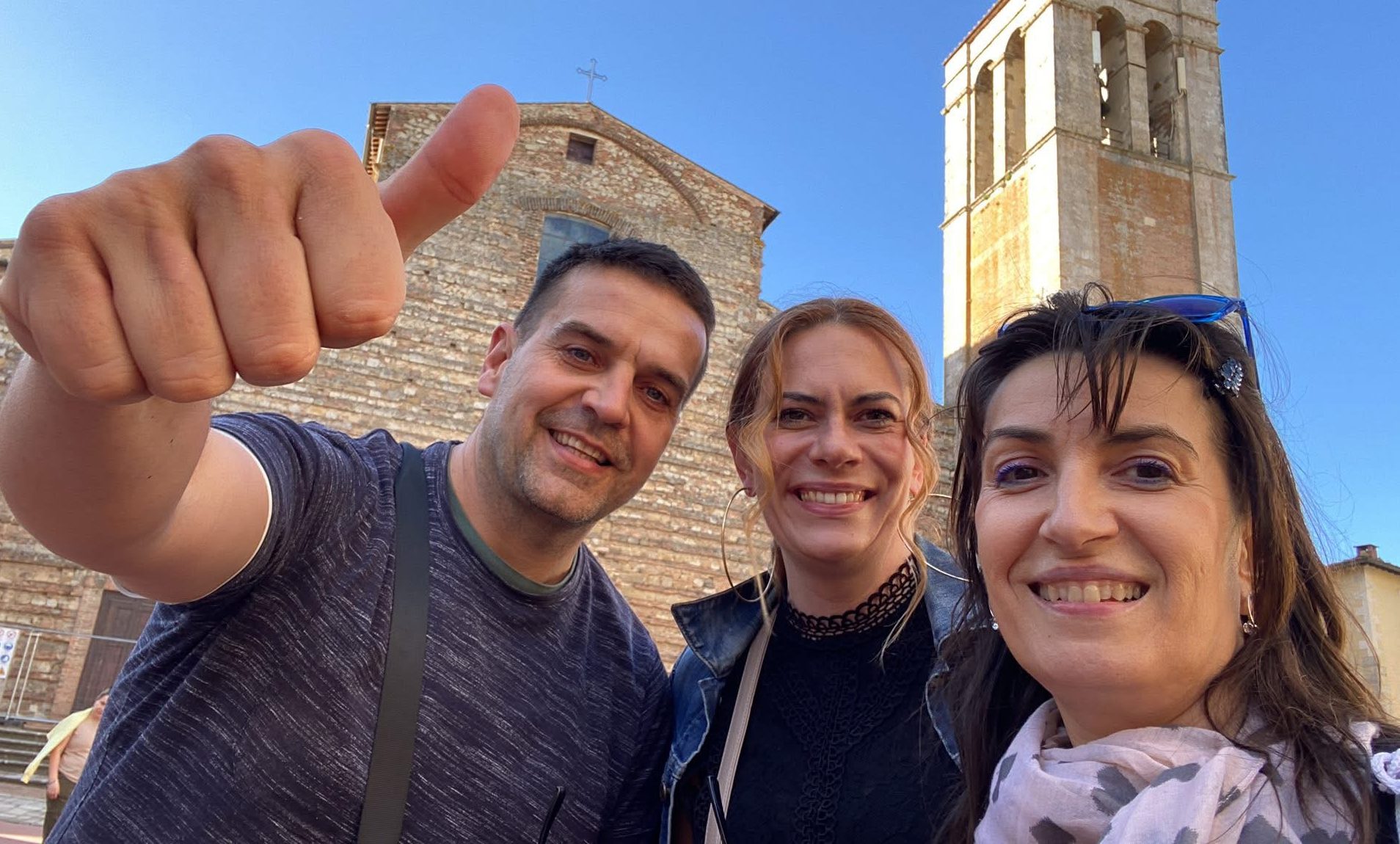
A group of 50-year-olds is learning Italian because the classes are fun, they laugh a lot and they can use the language when they travel.
We also have students who are planning to spend their retirement in Spain, for example. Others tell us: “It gets boring at home, so we want to socialise and learn something new.”
The truth is, all of these reasons matter.
And you don’t need to speak a language perfectly. Even 1,000 to 3,000 words can be enough to have a basic conversation.
What the experts say
Research suggests that learning a foreign language later in life can benefit not only the soul, but the brain as well.
Learning a language can challenge memory, attention, mental agility, creativity and other aspects of cognitive function. It’s certainly not a magical cure for ageing or dementia, but it is one of the most complex activities you can ask your brain to do.
And perhaps most importantly, at this stage of life, we no longer feel the same need to prove ourselves. We don’t have to be the first, the best or the most successful.
We’re also less afraid of making mistakes. Compared with our 20-year-old selves, we’re more confident – and we can even learn to enjoy those embarrassing moments.
Keeping your brain active by switching between different activities is also a good idea. Once you’re happy with the level of the language you’ve reached, why not try something completely different? Take a dance class, play chess, go swimming, do sudoku, try sewing or simply change up your daily routine.
And on top of everything else, these activities can give you something that is much harder to measure scientifically: new experiences, new friends, more confidence and the satisfaction of knowing that you’re still moving forward.
Doing it because you want to, not because you have to
Our children think that turning 50 means being over the hill. After 11 years of running a language school, we think quite the opposite.
Learning a language isn’t just about vocabulary and grammar. It’s about curiosity. About the joy of discovery. About the people we meet along the way. And about the feeling that we’re still moving forward.
The motivation comes from within. We’re not learning because we need a language for work, school or a certificate. We’re learning because we want to.
Remember: it’s about the journey, not the destination!
At our age, it’s enough to keep working on ourselves. When someone is better than us, we can feel motivated by them and happy for them rather than threatened.
And being part of a community with people who share our interests makes the whole experience even more enjoyable.
There is a famous Slovak song called Čože je to päťdesiatka? The title is difficult to translate literally, but the idea is roughly “What’s 50, anyway?” What if we learn to sing it together in several different languages?